

Eulogy for Dad: Examples and Help Writing a Tribute to Your Father
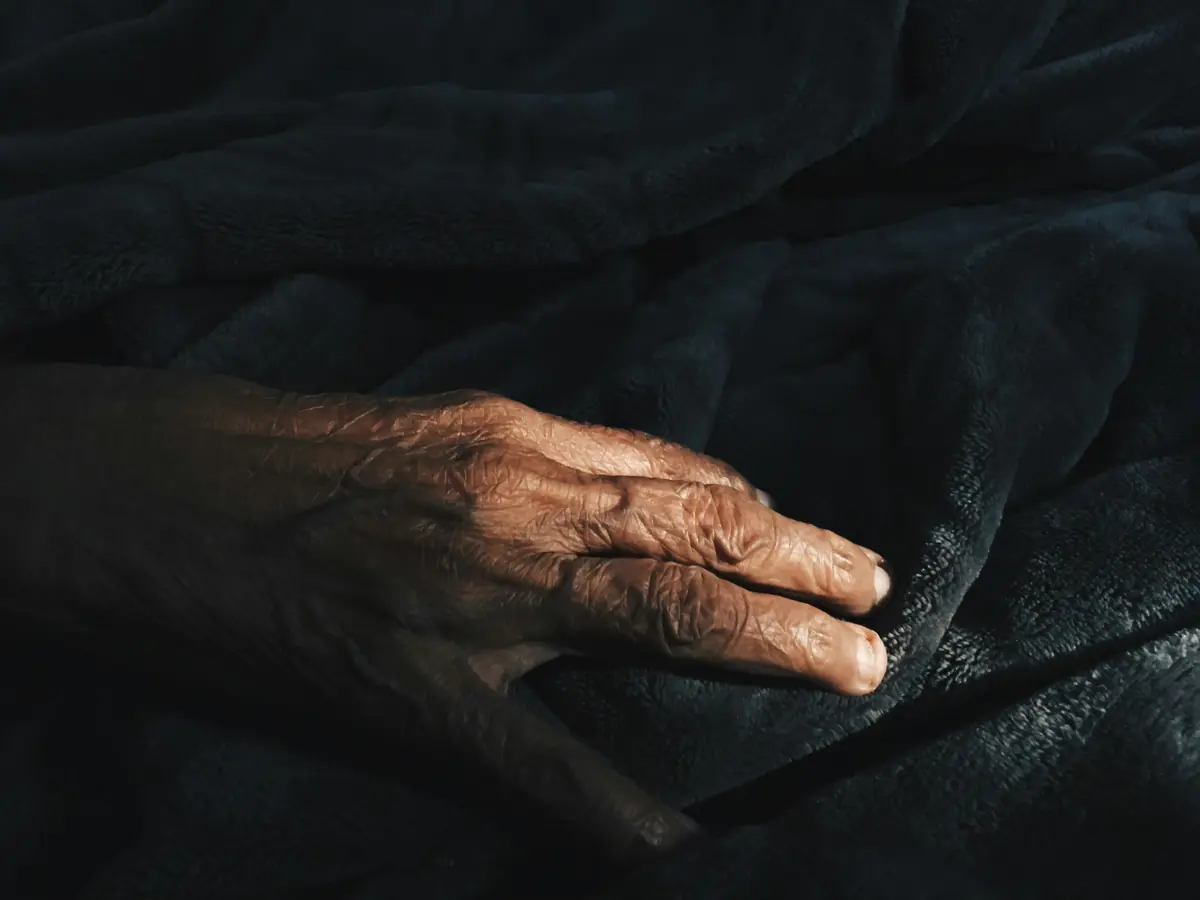
Writing a eulogy for your dad can feel like trying to fit a whole person into a few pages. Maybe he was the loudest voice at every cookout. Maybe he was a man of very few words, and you're not sure where to start. Either way, you knew him in a way no one else did, and that is what the room wants to hear.
Here you'll find questions to help you remember, four original sample eulogies for a father, and practical tips for the moment you stand up to speak.
Key points
- A eulogy for your father doesn't need to be long. About 3 to 5 minutes is typical, and a 1-minute tribute can say everything that matters.
- A spoken minute is about 125 to 150 words. A 2-minute eulogy is roughly 250 to 300 words.
- One good story about your dad will say more than a list of his qualities.
- If he was quiet, let his actions and other people's stories speak for him.
- It's all right if your voice breaks. Have a printed copy and a backup reader ready.
Feeling stuck? You don't have to start from nothing. If you think better on paper, the eulogy workbook is coming soon.
What to include in a eulogy for your father
A eulogy for your dad can follow a simple shape: who he was, a story or two that shows it, and what he leaves behind. Pick out the moments that sound like him. You don't have to tell his whole life story.
Answer whichever of these questions speak to you. Jot quick notes, not full sentences. The ones you answer fastest are often the heart of your eulogy.
Who he was
- What did people call him? Did he have a nickname, and is there a story behind it?
- What was always in his pockets, his truck, his desk drawer or his kitchen?
- What did he say so often that the family can finish the sentence?
- What made him laugh, really laugh?
What he was like as a dad
- How did he show love? With words, a hug, a joke, a ride, a job done without being asked?
- What did the two of you do together: a game, a show, a drive, a team you cheered for?
- What did he teach you, on purpose or by accident?
- When did you feel most proud of him, or most proud to be his kid?
The rest of his life
- What was his work, and what did he think of it?
- Did he serve in the military? A line about his service can mean a great deal to the veterans in the room.
- Who were his friends? What did his coworkers, neighbors, or his congregation know about him that you didn't?
- Was there a dog who rode along everywhere, or a cat who sat on his newspaper? Mentioning a pet he loved can bring a warm smile to the room.
What he leaves behind
- What do you do now that you learned from him?
- What would he want you to tell his grandchildren?
- If you could have one more ordinary afternoon with him, what would you do?
If your dad was a quiet man
Many people find a eulogy for a quiet father especially hard. There may be no big speeches to quote and few "I love yous" to remember. That doesn't mean there isn't plenty to say.
Look at what he did. Who did he help? What did he show up for, year after year? What did he make, mend, grow or keep? Ask his friends and coworkers for one memory each. Quiet people are often remembered for small, steady kindness, and other people's stories can fill in the parts he never said out loud. A short eulogy can suit a quiet man perfectly.
Eulogy for a father: examples
These samples are original, with made-up names. Borrow the shape, then make it yours. Timings are approximate, at an easy speaking pace.
A very short eulogy for a quiet dad (under 1 minute)
For a graveside, a small service, or when many people will speak.
My dad, Frank, carried mail for thirty-two years. He didn't talk much, but he knew every dog on his route by name, and every one of them was glad to see him. He kept dog biscuits in his left pocket and stamps in his right, and he never mixed them up.
He was the same way at home. He didn't say much. He just did things. Every winter, he shoveled our elderly neighbor's walk before he shoveled ours.
Dad, you delivered for all of us, every day. Your route is finished now. We'll take it from here. We love you.
A warm, funny eulogy with a touch of Jewish tradition (about 2 to 3 minutes)
Hello, everyone. I'm Miriam, Howard's daughter.
My father had two great loves outside of his family. The first was bread. The second was telling you about bread.
Every Friday afternoon for as long as I can remember, Dad made challah for Shabbat. He'd tie on my mother's flowered apron, which was much too small for him, and braid the dough while explaining the science of yeast to anyone who wandered into the kitchen. The neighbors. The plumber. Once, a man who had only come to read the gas meter. That man left with a loaf.
Dad was an accountant, and he loved order. His tax files were perfect. His sock drawer was alphabetized by color, which I still don't understand. But in the kitchen, he let things get messy. Flour on the floor, flour on the dog, flour on us. I think that was the place where he let himself play.
He taught me to braid challah when I was six. My first one looked like a tangled rope, and he served it at dinner as if it came from a fancy bakery. "This one has character," he said. Over the years he said that about a lot of things: dented cars, rainy vacations, my first apartment. It was his way of saying that imperfect things can still be wonderful.
In his last year, his hands weren't strong enough to knead. So I came over on Fridays and kneaded for him, while he sat at the table and told me I was doing it wrong. He was right. I was. We laughed every week.
Last Friday, I made challah in his kitchen, in his apron, and I told the dog all about the yeast. It had character.
Dad, thank you for the bread, the flour on the floor, and every lesson you hid inside a recipe. May your memory be a blessing.
A eulogy for a father when the relationship was complicated (about 2 minutes)
For a dad who wasn't always there. It is honest, but not bitter, and it doesn't pretend everything was settled.
Good afternoon. My name is Andre, and Curtis was my father.
I'll be honest with you, because I think he would want that. My dad wasn't around for a lot of my childhood. He had his reasons, and he had his struggles, and for a long time I had a lot of anger about it. Some of you in this room helped raise me in those years, and I want to thank you for that first.
We never had one big talk that fixed everything. I'm still working out what I feel, and I may be for a while. But some things I know for sure.
He gave me his hands, big and square, and the habit of tapping a beat on any table I sit at. He also gave me a crate of old soul records that he left at my grandmother's house when I was small. I wore those records out. I didn't know until last week that he had picked out every one of them for me.
And in his last few years, he tried. He came to my son's first birthday and stood near the back, holding a present he had wrapped himself, badly. He learned his grandson's favorite cartoon so the two of them would have something to talk about. It wasn't everything I needed when I was a boy. But it was something, and it counted.
I'm not going to pretend the early years didn't happen. They did. But I'm also not going to let them be the whole story, because he didn't.
Dad, I'm still sorting it out, and I think you'd understand that. Thank you for the records, and for trying. Rest now.
A longer eulogy with a touch of Muslim faith (about 4 to 5 minutes)
Tender and warm, for a father of strong, quiet faith.
Assalamu alaikum, and thank you all for being here. I'm Omar, Yusuf's eldest son.
My father was a civil engineer. He spent forty years designing roads and bridges, and that meant every family road trip came with a lecture. We couldn't cross a river without him slowing down, pointing out the window and saying, "Look at that. A suspension bridge. Do you know how much weight that cable holds?" We did not know. We never wanted to know. He told us anyway, every single time. Somewhere along the way, without my noticing, I started to love bridges too. My own children now groan when I slow down the car.
My father woke before dawn every morning of his life to pray Fajr. When I was a boy, I would sometimes wake up and see him in the dim living room, on his prayer rug, very still. Afterward he'd make tea, strong and sweet with cardamom, and sit by the window while the sky turned light. He told me once that it was his favorite part of the day, because "the world hasn't asked for anything yet." I think about that every morning now.
He came to this country with one suitcase and a degree that nobody here recognized. He drove a taxi at night and studied during the day until he could take his exams again. He never complained about those years. When I asked him about them, he only said, "It was a good lesson in patience." My father had a great deal of patience. He needed it, with four children.
He was generous in ways that he never talked about. After he died, we heard from people we had never met. A young man whose college books he quietly paid for. A neighbor whose roof he helped repair. The woman at the mosque who said he drove her to every doctor's appointment for a year after her husband passed. He never mentioned any of it at home. He believed that charity done in secret meant the most.
He also fed the stray cats behind his office for fifteen years. He named every one of them after a famous engineer. There was a very large orange cat called Brunel who apparently outlived three office managers. When my father retired, he made his younger colleagues promise to keep feeding them, and he checked on it.
He was not perfect. He was stubborn, and he could be strict, and he and I argued more than once about my choices when I was young. But he never stopped calling. Every Sunday for twenty years, my phone rang at seven o'clock, and his first question was always, "Are you eating?" The second was, "Are you praying?" The third was about the weather where I lived, which he had already checked.
In his last weeks, he asked me to read to him from the Qur'an, and to sit with him in the early mornings the way he used to sit alone. So we did. We drank tea that I didn't make as well as he did. We watched the sky turn light. Near the end he told me, "I built a lot of bridges. The best ones were to all of you."
Baba, you carried us across so many rivers. We will try to be as patient, as generous and as quietly faithful as you were. And yes, we'll keep feeding the cats.
Inna lillahi wa inna ilayhi raji'un. To God we belong, and to Him we return.
How long should a eulogy for your dad be?
Ask the officiant or funeral director how much time you have, especially if others are speaking too. One funeral directors' guide suggests five to ten minutes for a main eulogy, while many family members speak for two or three. If you aren't sure, aim for about 3 minutes, which is roughly 375 to 450 words.
Tips for getting through it on the day
- Write it to be heard. Short sentences are easier to say and easier to follow. Read each line aloud as you write it.
- Know your last line. If you lose your place or your voice, you can skip ahead to your closing words and still end well.
- Slow down. Nerves make us rush. Speaking slowly helps your voice carry and gives people time to take in what you say.
- Stand still and plant your feet. Rest your hands on the lectern or hold your pages with both hands.
- Bring something of his. His watch on your wrist or his cap on the lectern can steady you.
- Have a backup reader. Give a printed copy to someone who can finish for you if you can't.
- Pause when you need to. Take a few breaths and go on. Everyone in the room is on your side.
After the service, some families tuck the eulogy into a memory book or frame a copy for each child. For more ideas and sample tributes, see Top 5 Eulogy Writing Books.
Want a little help putting it together? Work through the eulogy workbook at your own pace, with a pen in hand.
Related articles
Sources
- Funeral.com, "How Long Should a Eulogy Be? Typical Time Limits and How to Stay Within Them" - https://funeral.com/blogs/the-journal/how-long-should-a-eulogy-be-typical-time-limits-and-how-to-stay-within-them
- National Association of Funeral Directors (NAFD) Funeral Directory, "How to Write a Eulogy" - https://funeral-directory.co.uk/guides/how-to-write-a-eulogy/
- Marie Curie, "Well chosen words: How to write a eulogy" (PDF) - https://www.mariecurie.org.uk/globalassets/media/documents/how-we-can-help/information-for-bereaved-family-and-friends/arranging-the-ceremony/how-to-write-a-eulogy.pdf
- The sample eulogies are original writing. Timings assume an easy speaking pace of about 125 to 150 words a minute.
- University of Minnesota Libraries, Communication in Practice, Vocal Delivery - https://open.lib.umn.edu/commpractice/chapter/vocal-delivery/