

Day of the Dead: What It Is and How Families Celebrate
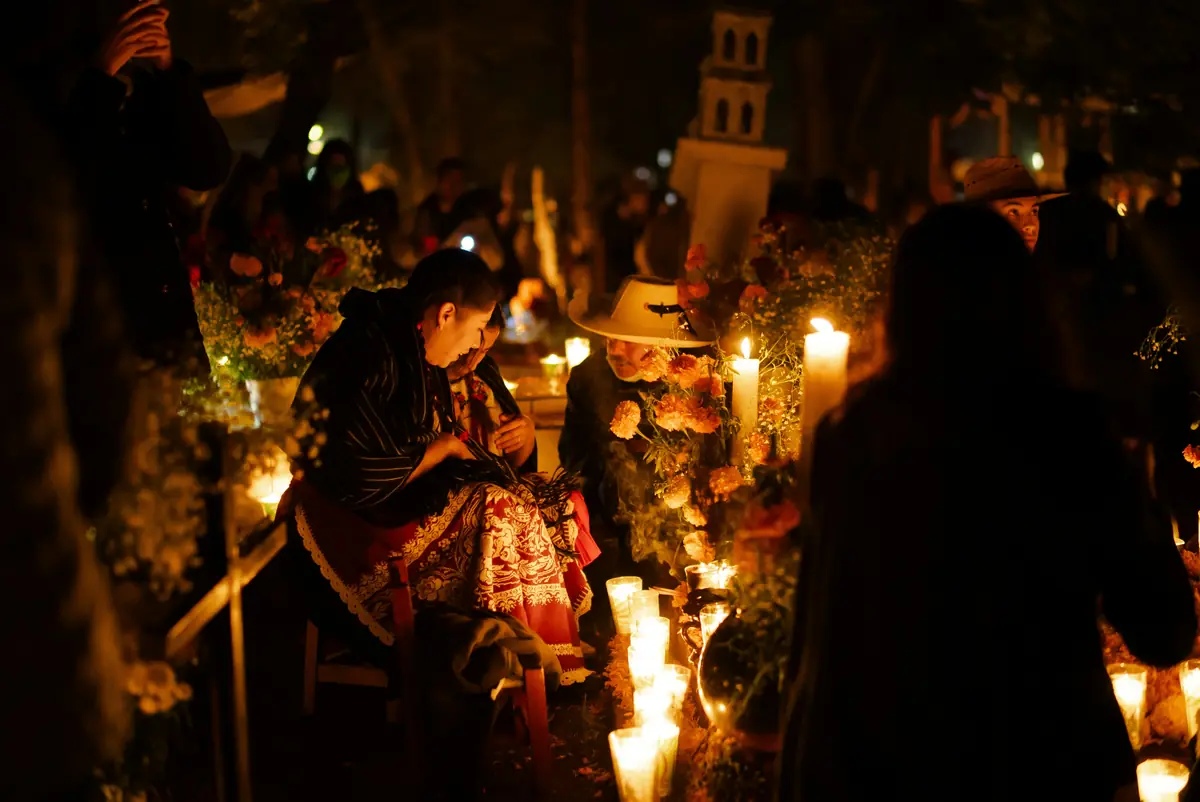
Day of the Dead, or Día de los Muertos, is a Mexican holiday for remembering people who have died. Families build altars, visit graves and share food, music and stories. The Smithsonian describes it as a time of joy rather than sorrow, and many of its customs go back to Indigenous traditions in Mexico that are much older than the holiday itself.
When is Day of the Dead?
The main days are November 1 and 2. In many communities, November 1 is for children who have died, and November 2 is for adults. Some communities begin at the end of October. UNESCO describes the festivities as taking place from the end of October into the beginning of November, so the exact days and customs differ from one community to the next.
Where does it come from?
The holiday began in ancient Mesoamerica, in what is now Mexico and northern Central America. The Smithsonian notes that Indigenous groups, including the Aztec, Maya and Toltec, set aside particular times to remember the dead, depending on whether the person had been an adult or a child. After the Spanish arrived, those observances merged with two Catholic days, All Saints' Day on November 1 and All Souls' Day on November 2.
UNESCO added the festivity to its Representative List of the Intangible Cultural Heritage of Humanity in 2008, after first proclaiming it in 2003. It points out that the season also marks the end of the yearly cycle of growing maize, the main food crop of the country. UNESCO calls the holiday a fusion of pre-Hispanic rites and Catholic feasts.
What is an ofrenda?
An ofrenda is a temporary altar that families set up at home or at a grave. It holds photographs of the person who died, along with their belongings and objects that remind the family of them. The Smithsonian explains that an ofrenda often includes the four elements:
- Water, often left in a pitcher so the spirits can quench their thirst.
- Wind, shown by papel picado, the cut paper banners.
- Earth, shown by food, especially bread.
- Fire, shown by candles, often set in the shape of a cross to mark the directions.
What do the flowers, skulls and butterflies mean?
Marigolds, called cempasúchil, are the best known flower of the holiday. They are placed on ofrendas and around graves, and their strong scent and bright color are said to guide spirits home. Families sometimes scatter the petals to make a path from the cemetery to the house. UNESCO describes the same practice with petals, candles and offerings laid along that path.
Sugar skulls, called calaveritas, are brightly decorated and left on altars, together with toys, for children who have died. The Smithsonian says the skull is used as a playful reminder that life moves in cycles and not as a grim symbol.
Monarch butterflies also appear in the decorations. People believe they carry the spirits of the dead, and the first monarchs of the season reach Mexico around November 1.
La Catrina, the elegantly dressed skeleton, grew out of a skeleton print by the Mexican printmaker José Guadalupe Posada, who made cheap printed sheets with skeleton drawings. She first poked fun at people who pretended to be something they were not, and later artists gave her the fancy hat and dress. She is now one of the holiday's best known images.
What do families eat and do?
Food is part of the offering. UNESCO says families prepare the favorite dishes of the person who died and set them around the home altar and the tomb. Pan de muerto, a sweet bread made for the season, is a common part of ofrendas, and UNESCO lists tortillas and tamales among the Day of the Dead offerings as well.
Many families visit the cemetery and decorate the grave. In many places, cemeteries fill with candles, flowers, music and family. Some families, including some Mexican American families, share a meal at the grave. Customs differ by region.
Is it the same as Halloween?
No. The two holidays fall close together, and some communities celebrate both, but Day of the Dead has its own history and meaning. Halloween falls on October 31, and Day of the Dead follows on November 1 and 2.
Day of the Dead in the United States
Mexican immigrants brought the holiday to the United States, and the Smithsonian traces the custom back to the 1890s. Early observances were quiet and religious, with Mass, flowers and visits to the grave. In the 1970s, Chicano artists and activists began holding large public celebrations. One of the first took place in East Los Angeles in 1973, with ofrendas, a parade and costumes. Today many families keep personal traditions, and museums and community groups hold public events as well.
Sources
- UNESCO, Indigenous festivity dedicated to the dead (Mexico), Representative List of the Intangible Cultural Heritage of Humanity - https://ich.unesco.org/en/RL/indigenous-festivity-dedicated-to-the-dead-00054
- UNESCO Archives, Indigenous Festivity Devoted to the Dead - https://www.unesco.org/archives/multimedia/document-3743
- UNESCO, Traditional Mexican cuisine, ancestral, ongoing community culture, the Michoacán paradigm - https://ich.unesco.org/en/RL/traditional-mexican-cuisine-ancestral-ongoing-community-culture-the-michoacan-paradigm-00400
- Smithsonian Institution, 5 Facts About Día de los Muertos (The Day of the Dead) - https://www.si.edu/stories/5-facts-about-dia-de-los-muertos-day-dead
- Smithsonian American Art Museum, Traditions and Change: The Transformation of Día de los Muertos in the United States - https://www.smithsonianmag.com/blogs/smithsonian-american-art-museum/2026/10/30/traditions-and-change-the-transformation-of-dia-de-los-muertos-in-the-united-states/
- Smithsonian National Museum of American History, Día de los Muertos - https://americanhistory.si.edu/about/departments/latino-history-and-culture/cultura-d%C3%ADa-de-los-muertos
- Encyclopaedia Britannica, Catrina - https://www.britannica.com/topic/Catrina
- Secretaría de Cultura (Mexico), La historia de La Catrina - https://www.cultura.gob.mx/noticias/patrimonio-cultural-arquitectura-yturismo/16765-la-historia-de-%C2%93la-catrina%C2%94-que-todosllevamos-dentro.html
- Smithsonian Latino Center, Dia de los Muertos Festival press release (pan de muertos) - https://www.si.edu/newsdesk/releases/smithsonian-latino-center-presents-dia-de-los-muertos-festival-3-d-experience-smithsonian-l