

Christian Beliefs in the Afterlife
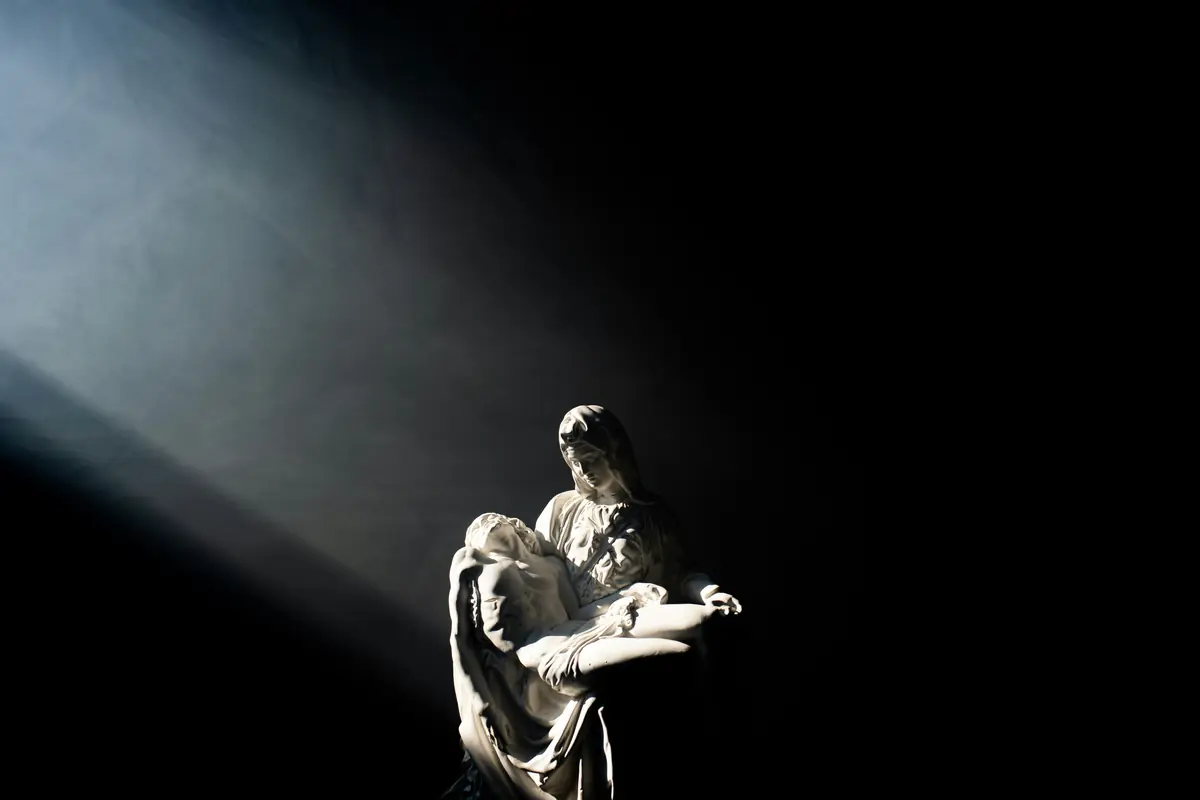
Christianity is the largest religion in the world. The Pew Research Center counted about 2.3 billion Christians in 2020, roughly 29% of the world's population. Most Christians believe that death is not the end, that those who trust in God will be raised to eternal life, and that each person will in some way face God's judgment. Beyond that, Christians describe the afterlife in different ways, depending on their church, their reading of the Bible, and their own conscience.
This page offers a short overview. It cannot cover every church, and it is not meant to say who is right. If you are facing a death, or grieving one, your own pastor, priest or chaplain is the best person to ask what your church teaches.
What most Christians share
Despite their differences, nearly all Christians hold a few things in common.
Hope in Jesus and in resurrection. Christians believe that Jesus died and rose again, and that through him there is life after death. A well-known verse says (King James Version), "For God so loved the world, that he gave his only begotten Son, that whosoever believeth in him should not perish, but have everlasting life" (John 3:16). Another promises, "Death is swallowed up in victory" (1 Corinthians 15:54).
A loving God and a coming judgment. Most Christians believe each life is seen and weighed by God. Jesus describes this in Matthew 25:31-46, where people are judged by how they treated the hungry, the sick and the stranger.
One earthly life. Christian churches do not teach reincarnation. They teach that a person lives one life on earth and then is raised, not reborn into another body.
Heaven. Heaven is understood as being with God in joy, with no more death or tears (Revelation 21:4). Jesus told the person dying beside him, "Today shalt thou be with me in paradise" (Luke 23:43).
Hell as separation from God. Most Christians understand hell, in some way, as being apart from God. What that looks like is one of the biggest questions Christians disagree about, as you will read below.
How salvation works
Salvation is the word Christians use for being rescued from sin and death and welcomed into eternal life with God. Churches differ on how it happens.
- Catholic Church. Catholics teach that salvation is God's gift, received through faith, and lived out in love and good works, with the help of the sacraments (such as baptism, confession and the Anointing of the Sick, which is often given near death). Catholics also pray for those who have died.
- Orthodox churches. Orthodox Christians, including the Greek, Russian, Antiochian and other churches, also see salvation as a gift of God's grace and as a lifelong journey toward union with God, with the sacraments and prayer at its heart.
- Protestant churches. Many Protestants, from Lutheran and Reformed to Baptist and Pentecostal churches, emphasize that salvation comes through God's grace and personal faith in Christ, not through our own good deeds (Ephesians 2:8-9). Most also say real faith shows itself in how a person lives (James 2:26).
Many Christians would say that good deeds alone cannot earn heaven, but that someone who has truly been touched by God will want to love and serve others.
What happens at death
Catholic view. The Catechism of the Catholic Church teaches that those who "die in God's grace and friendship, but still imperfectly purified" are assured of salvation, and are purified after death so they can enter the joy of heaven. The Church calls this final purification purgatory (paragraphs 1030-1031). The teaching is tied to the ancient practice of praying for the dead, which Scripture describes in 2 Maccabees 12 (paragraph 1032). The Church teaches that hell is a "definitive self-exclusion from communion with God," the state of those who die in mortal sin without repenting and accepting God's merciful love, and that its chief punishment is eternal separation from God (paragraphs 1033-1035). Catholics pray for the dead, especially at Mass, and remember them on All Souls' Day, November 2.
Orthodox view. The Greek Orthodox Archdiocese of America teaches that the soul stays conscious after death and that a person is judged at death, then experiences either paradise or hell until the Last Judgment, when the soul is joined again with a risen and transformed body. Orthodox churches do not teach purgatory. They do pray for the departed, asking God's mercy for them, and hold memorial services about forty days and one year after a death. Many Orthodox writers describe heaven and hell not as two places, but as two ways of experiencing the same presence of God.
Protestant views. Most Protestant churches do not teach purgatory and do not pray for the dead in the same way, though many hold funerals and memorials that give thanks for a life and comfort the living. Many Protestants believe that, at death, a believer's soul goes to be with Christ (2 Corinthians 5:8) and awaits the resurrection of the body.
Hell, heaven, and honest disagreement
Christians disagree about hell more than almost anything else.
- Some Christians, including many evangelical and fundamentalist churches, teach that hell is a place of everlasting suffering for those who have not accepted Christ.
- Others hold that hell is the total loss of God's presence, but not a place of torture or fire.
- Some believe in annihilationism, the idea that those who finally reject God do not suffer forever, but simply cease to exist.
- A smaller number of Christians hope that in the end God's love will win over every person, a belief called universalism.
There is also disagreement about who can be saved. Some Christians teach that salvation comes only through faith in Jesus. Others hold that God's mercy reaches people who have never heard of Christ, including young children, people who lived long before Christianity, and people in places where Christianity is little known. Many of these Christians hope that God judges fairly and with mercy, and does not condemn anyone for a lack of opportunity.
In the United States, the Pew Research Center's 2021 survey found that about 31% of Christians said their own religion is the one true faith leading to heaven, while about 58% said many religions can lead there. Among evangelical Protestants, about half said theirs was the one true faith. Among Catholics, 16% did.
Comfort for those who grieve
The Bible does not ask Christians to hide their grief. Paul writes to grieving believers that they need not grieve as people who have no hope (1 Thessalonians 4:13). Grief is real, and so is hope. Many Christians find comfort in the promise that those who die are held in God's care (Romans 8:38-39), and that they will meet again.
Many people ask whether their pets will be in heaven. No Christian church has an official teaching that settles the question. Some Christians find hope in passages that speak of all creation being renewed (Romans 8:19-21, Revelation 21:5). If this is on your heart, you may want to talk with your pastor or priest. pet loss section, "Will my pet go to heaven?"
Sources
- Pew Research Center, "How the Global Religious Landscape Changed From 2010 to 2020" - https://www.pewresearch.org/religion/2025/06/09/how-the-global-religious-landscape-changed-from-2010-to-2020/
- Pew Research Center, "Views on the Afterlife" (2021) - https://www.pewresearch.org/religion/2021/11/23/views-on-the-afterlife/
- Vatican, Catechism of the Catholic Church, "The Final Purification, or Purgatory" (paragraphs 1030-1032) - https://www.vatican.va/content/catechism/en/part_one/section_two/chapter_three/article_12/iii_the_final_purification,_or_purgatory.html
- Vatican, Catechism of the Catholic Church, "Hell" (paragraphs 1033-1037) - https://www.vatican.va/content/catechism/en/part_one/section_two/chapter_three/article_12/iv_hell.html
- Vatican, Pope Benedict XVI, Angelus, 2 November 2008, All Souls' Day - https://www.vatican.va/content/benedict-xvi/en/angelus/2008/documents/hf_ben-xvi_ang_20081102.html
- Greek Orthodox Archdiocese of America, "Death, the Threshold to Eternal Life" - https://www.goarch.org/-/death-the-threshold-to-eternal-life
- Bible Gateway, John 3:16, 1 Corinthians 15:54 and Luke 23:43 (King James Version) - https://www.biblegateway.com/passage/?search=John+3%3A16\&version=KJV
- Encyclopaedia Britannica, "Christianity" and "Eastern Orthodoxy" (for the main branches) - https://www.britannica.com/topic/Christianity ; https://www.britannica.com/topic/Eastern-Orthodoxy